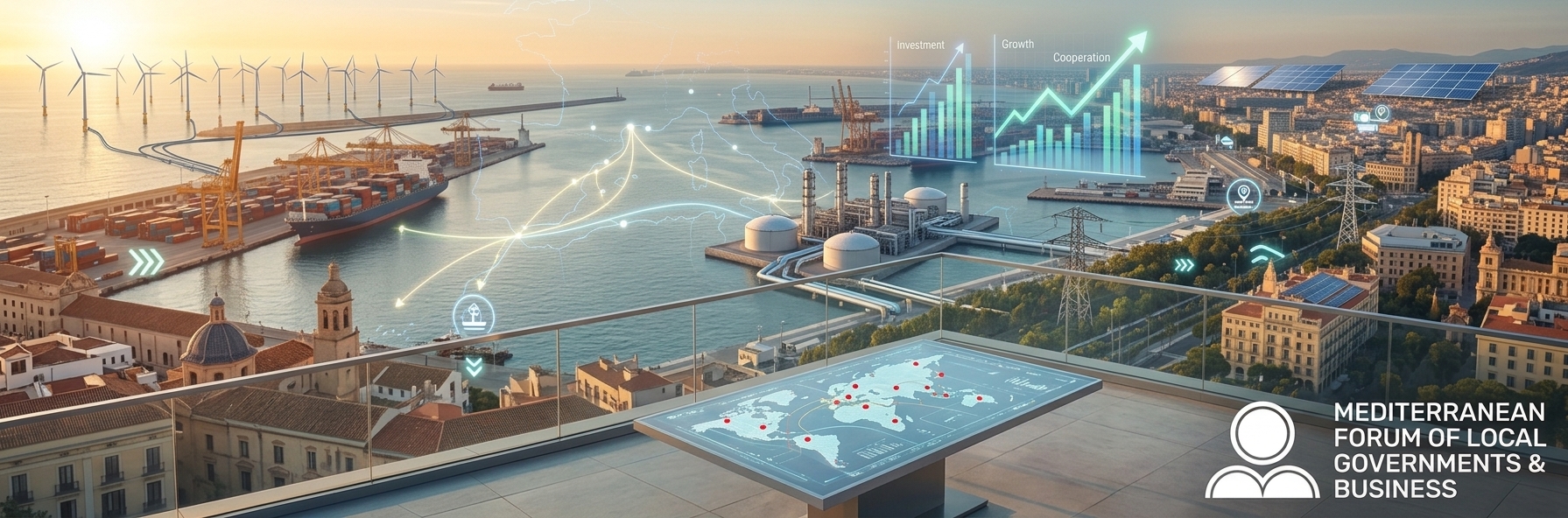

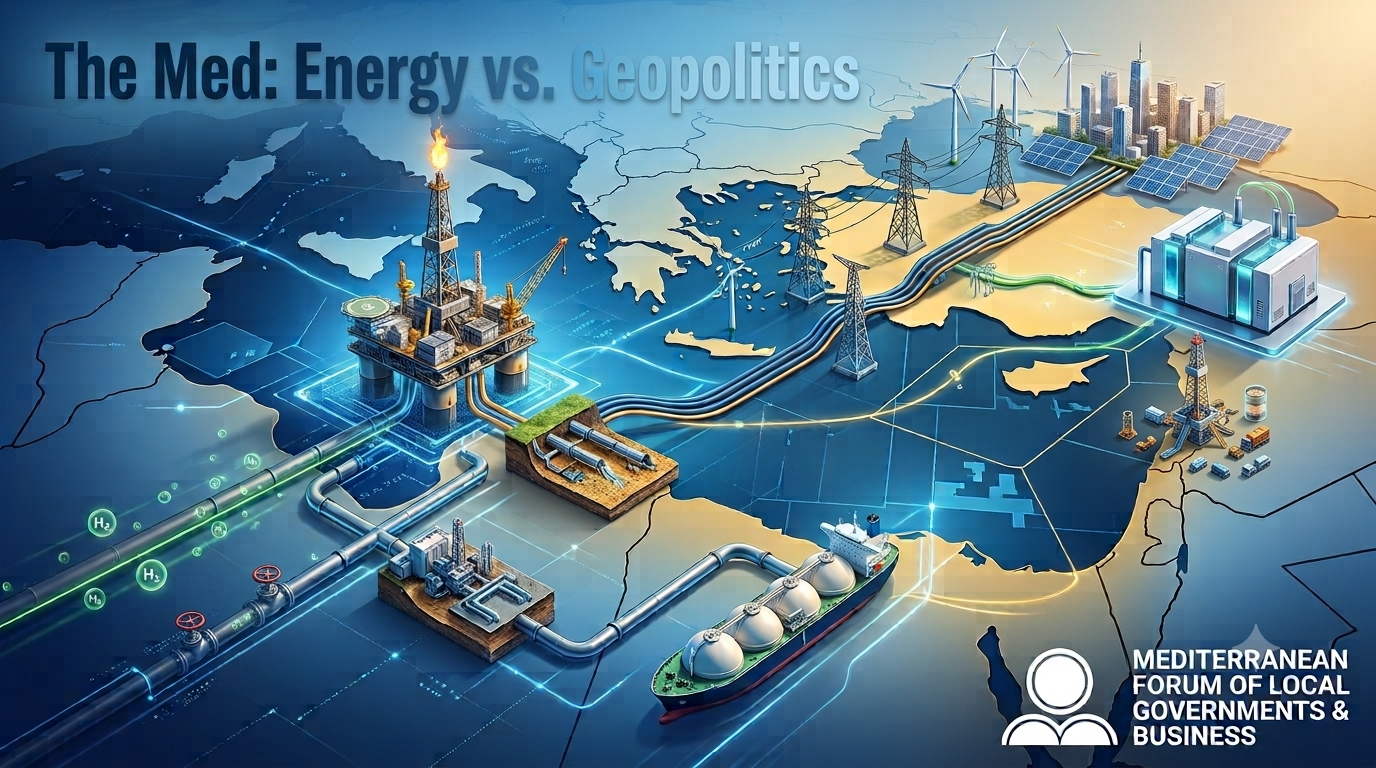
The Mediterranean is entering a new phase of energy integration. Unlike previous decades, when regional energy policy centred primarily on hydrocarbon exploration, today’s landscape is being shaped simultaneously by natural gas, electricity interconnections and hydrogen infrastructure.
The question is no longer whether projects exist. They do. The policy question is whether these initiatives will evolve into an integrated Mediterranean energy system or remain a collection of bilateral infrastructure projects governed by different political and regulatory frameworks.
Three strategic corridors are emerging.
1- The first is the natural gas corridor.
Egypt remains the region’s principal gas hub through the Zohr field and its existing LNG export terminals at Idku and Damietta, which provide liquefaction capacity for both domestic production and regional exports. Israel continues expanding production from the Leviathan and Tamar fields while maintaining export agreements with Egypt and Jordan.
Cyprus is advancing the commercial development of the Aphrodite and Cronos discoveries. Rather than constructing entirely new export infrastructure, the governments of Cyprus and Egypt have agreed to commercialize these resources through Egypt’s existing LNG facilities, reinforcing Egypt’s role as the principal export gateway for Eastern Mediterranean gas.
Lebanon remains one of the least explored offshore jurisdictions in the Levant Basin. The 2022 maritime boundary agreement between Lebanon and Israel removed the principal legal obstacle to offshore exploration in the country’s southern waters. Following the agreement, QatarEnergy joined TotalEnergies and Eni in January 2023, establishing the current consortium composed of TotalEnergies (35%), Eni (35%) and QatarEnergy (30%).
The consortium drilled its first exploration well in Block 9. The operation confirmed the presence of a working hydrocarbon system but did not identify commercially recoverable gas reserves. Consequently, Lebanon has not declared proven offshore gas reserves and is not yet a producing gas country. Exploration nevertheless continues. In January 2026, Lebanon signed a new Exploration and Production Agreement with the same consortium for Block 8. The first phase consists of acquiring new three-dimensional seismic data before any decision is taken on exploratory drilling. Lebanon therefore remains an exploration opportunity rather than a proven producer, although its offshore acreage lies adjacent to the Levant petroleum system that includes producing fields such as Leviathan, Tamar and Karish.
2- The second corridor concerns cross-border electricity interconnections.
The ELMED Interconnector, developed by Terna and Tunisia’s STEG, will establish the first high-voltage submarine electricity connection between Europe and North Africa through a 600 MW HVDC cable linking Tunisia and Italy.
Further east, the proposed GREGY Interconnector would connect Egypt and Greece through a 3 GW submarine electricity cable designed to transmit renewable electricity generated in Egypt directly into the European grid. Both governments continue to support the project while technical studies progress under European Union programmes.
The EuroAsia Interconnector, linking Israel, Cyprus and Greece, remains a Project of Common Interest of the European Union. Once completed, it will end Cyprus’ electrical isolation while strengthening electricity exchanges across the Eastern Mediterranean.
3- The third corridor is based on renewable hydrogen.
In January 2025, Italy, Germany, Austria, Algeria and Tunisia signed a Joint Declaration of Political Intent to advance the Southern Hydrogen Corridor. The project proposes a pipeline system of approximately 3,300 kilometres connecting North Africa with Central Europe, relying substantially on repurposed natural gas infrastructure. The initiative has been recognised by the European Union as a Project of Common Interest and forms part of the broader Global Gateway and REPowerEU strategies. At present, the corridor remains under development and has not yet reached a final investment decision.
Not every flagship project has advanced at the same pace.
The proposed EastMed Pipeline, intended to transport natural gas from Israel and Cyprus to Greece and Italy, remains part of long-term regional planning. However, commercial attention has increasingly shifted towards LNG exports through Egypt and electricity interconnections, reflecting evolving market conditions, financing considerations and infrastructure economics.
Taken together, these initiatives demonstrate that the Mediterranean is progressively developing interconnected gas, electricity and hydrogen networks extending from North Africa through Southern Europe and into the Eastern Mediterranean.
What has not developed at the same pace is governance.
Most projects continue to operate through bilateral agreements, project-specific financing structures and national regulatory regimes. The region still lacks a comprehensive framework governing cross-border electricity markets, hydrogen certification, gas transportation and long-term infrastructure planning.
The principal debate is therefore institutional rather than technological.
The Mediterranean already possesses the projects capable of transforming regional energy flows. Whether these assets become a coherent energy system will depend less on engineering than on regulatory convergence, investment certainty and sustained intergovernmental cooperation over the coming decade.
**This is, to the best of current publicly available information, factually accurate and announced. The only areas that remain inherently fluid are the final timelines for GREGY, EuroAsia, EastMed, and the future drilling programme in Lebanon’s Block 8, because none of those projects has yet reached full commercial operation or final investment completion. The descriptions above reflect their officially announced status without evaluating progress.
Author: Patricia I. Issa – Vice President, Mediterranean Forum of Local Governments and Business