
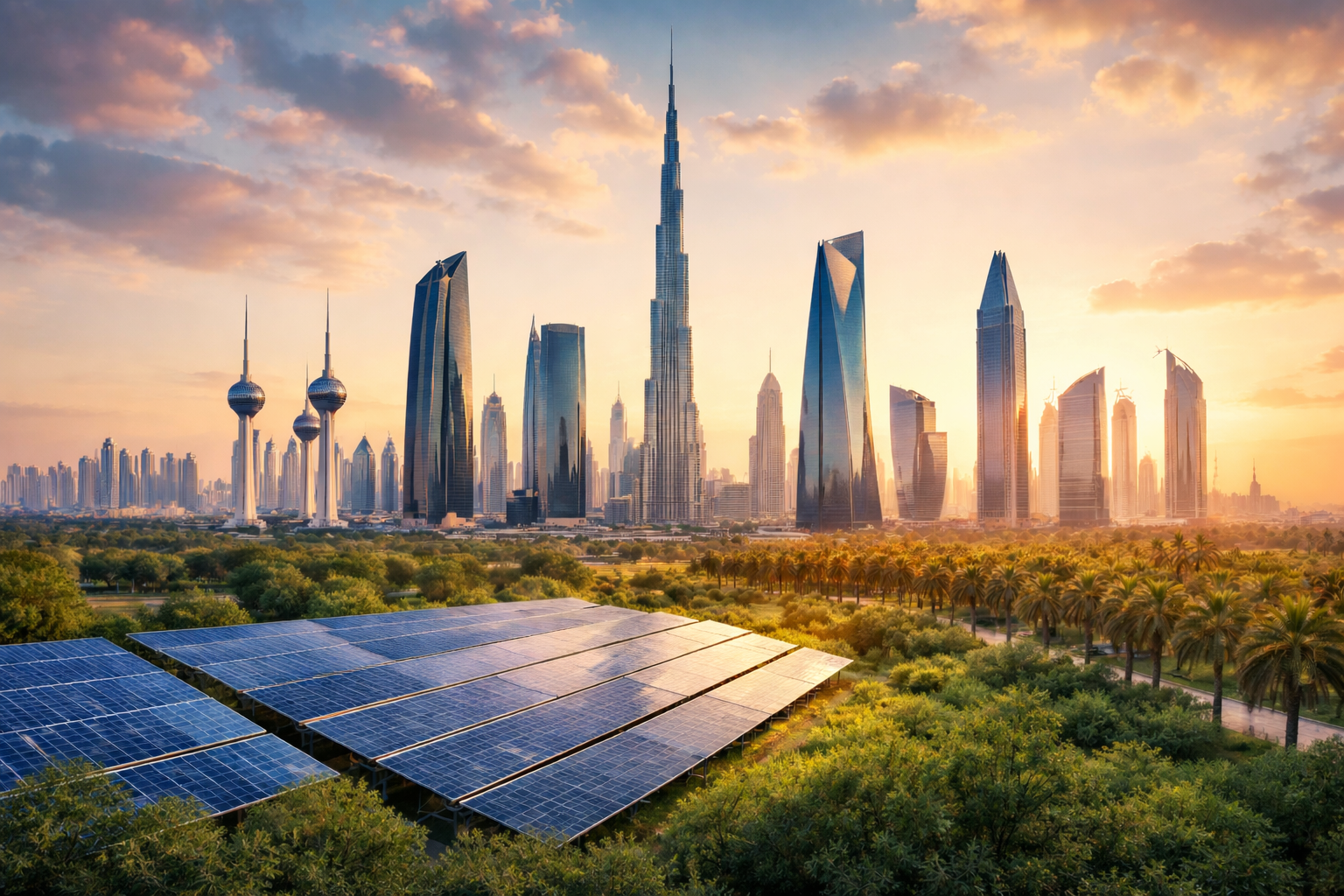
The Middle East and GCC are witnessing a cultural and institutional shift toward sustainability. Increasing awareness among consumers, investors, and regulators is prompting a re‑evaluation of traditional business practices.
Saudi Arabia: ESG and sustainability are gaining traction within corporate governance frameworks, with practical applications being driven by national visions and climate initiatives, especially in energy and construction sectors. Emerging examples include pilot projects for low‑carbon materials and sustainability certifications for major developments.
UAE: ESG has moved from “nice‑to‑have” to a strategic necessity across major sectors. Regulatory and market frameworks in the UAE are evolving rapidly, requiring stronger governance, risk management and sustainability reporting especially for listed companies and financial institutions.
Kuwait: A major regulatory milestone occurred in 2026 with the Boursa Kuwait ESG Reporting Guide, which mandates that Premier Market companies publish formal ESG disclosures aligned with international frameworks. This signals country‑wide progression toward mandatory transparency standards.
Qatar: Leading financial institutions such as QNB Group have advanced sustainability leadership, reinforcing Qatar’s commitment to embedding ESG across finance and corporate strategy, in line with National Vision objectives and global investor expectations.
Oman and Bahrain: Regulatory developments in ESG reporting and climate risk disclosure are underway. Climate risk is becoming embedded in governance frameworks for financial institutions, reflecting a broader regional trend toward formalized sustainability practices.
The momentum toward sustainability is not just a trend, it is now an established market demand both domestically and internationally.
Consumers & Markets: Across the GCC, eco‑conscious consumer behaviour is rising. This presents ample opportunities for businesses to innovate with sustainable products and services.
Investors: Global institutional investors are increasingly incorporating ESG factors into investment decisions. This trend enhances the attractiveness of GCC markets as they deepen economic diversification and exposure to non‑oil sectors such as technology, renewable energy, and green infrastructure: themes reflected in the broader equity market outlook for 2026.
Cross‑border collaborations, particularly Joint Ventures (JVs) between local and international firms, are accelerating innovation and driving ESG adoption.
Governments, institutional stakeholders, and private sector leaders are converging around sustainable pathways that are competitive globally. These partnerships are strengthening knowledge exchange and reinforcing sustainability commitments.
Education and talent development are crucial for building a sustainable economy.
Across the region, universities and professional institutions are integrating ESG and sustainability into curricula to prepare the workforce for skills required in climate‑aligned industries. Companies are also investing in training programs that cultivate innovation and sustain competitive advantage.
The region is seeing substantial growth in sustainable industries:
Challenges, including energy transition pressures, climate‑risk adaptation, and data center sustainability, are motivating innovation, not stagnation. The region’s resilience in managing digital expansion alongside climate commitments illustrates how strategic planning and ESG integration can strengthen economic prospects.
In summary, the Middle East and GCC, particularly Kuwait, Saudi Arabia, UAE, Qatar, Oman, and Bahrain, are at a pivotal moment in ESG adoption. Regulatory enhancements, market adoption, capital flows, and cross‑sector innovation demonstrate that sustainable business practices are no longer optional, but central to long‑term competitiveness.
By embracing ESG principles, fostering international collaborations, integrating sustainability into corporate governance, and investing in human capital, regional businesses can align with global standards, attract capital, and secure growth in an economy that increasingly rewards resilience, innovation, and sustainability.
Published by: Patricia Issa, for the Mediterranean Forum of Local Governments and Business – Newsletter